Mastering Italy's Roads: GPS Navigation Car Rental Italy
June 24, 2026 20 min read 3,989 words
Unlock the secrets to seamless navigation and unforgettable road trips across Italy's stunning landscapes.
Plan Your Italian Adventure
Why GPS Navigation is Essential for Car Rental in Italy
 Photo: Саша Алалыкин / Pexels
Embarking on a road trip through Italy is a dream for many, offering unparalleled freedom to explore ancient ruins, picturesque villages, and breathtaking coastlines at your own pace. However, to truly savor this experience without the stress of getting lost, reliable GPS navigation with your car rental in Italy isn't just a convenience – it's an absolute necessity. Italy's road network, while extensive and generally well-maintained, can be a labyrinth for the uninitiated. Historic city centers, often referred to as ZTLs (Zone a Traffico Limitato), are strictly regulated and can lead to hefty fines if entered without proper authorization. A robust GPS system acts as your co-pilot, alerting you to these zones, guiding you through complex interchanges, and helping you find parking in bustling towns. Beyond the practicalities of avoiding fines and staying on track, a good navigation system enhances your journey by allowing you to focus on the stunning scenery rather than constantly scrutinizing paper maps or road signs. It provides real-time traffic updates, estimates arrival times, and can even suggest alternative routes to bypass congestion, saving you valuable time and frustration. Imagine navigating the winding Amalfi Coast roads or finding that hidden trattoria in a Tuscan hillside town without a precise guide. It would be significantly more challenging, and potentially less enjoyable. Furthermore, for Canadian travelers accustomed to more straightforward road systems, the nuances of Italian driving, including different signage and often narrower roads, can be a significant adjustment. A reliable GPS bridges this gap, offering a layer of confidence and local insight that transforms a potentially stressful drive into a delightful exploration. It's an investment in peace of mind, ensuring your Italian adventure is filled with discovery, not detours. Understanding your options for GPS navigation, from built-in rental car systems to smartphone apps, is the first step in planning a seamless Italian road trip. Each option comes with its own set of advantages and considerations regarding cost, convenience, and functionality, which we'll explore in detail to help you make the best choice for your journey. Having a reliable navigation system also means you can spontaneously deviate from your planned route to explore an intriguing roadside attraction or a charming village you spot, knowing you can easily find your way back to your main itinerary. This flexibility is a core part of the joy of a road trip, and it’s something that
good travel planning, including robust navigation, facilitates. Without it, you might stick rigidly to main roads, missing out on some of Italy's most authentic experiences tucked away on smaller, less-traveled paths. The digital age has truly revolutionized how we travel, and nowhere is this more apparent than in international driving. Gone are the days of wrestling with oversized atlases or struggling with foreign language street names. With just a few taps on a screen, you can have turn-by-turn directions in your native language, making even the most intricate Italian piazzas feel navigable. This technological assistance not only saves time but also significantly reduces the cognitive load of driving in a foreign country, allowing you to fully immerse yourself in the cultural experience surrounding you rather than being preoccupied with logistics. For anyone considering a car rental in Italy, prioritizing your navigation strategy should be as important as choosing your vehicle or planning your itinerary. It's the silent partner that ensures your journey is smooth, efficient, and ultimately, unforgettable. The investment in a reliable GPS solution, whether it's a rental unit or a well-prepared smartphone, pays dividends in reduced stress and enhanced exploration. It allows you to embrace the unexpected joys of Italian travel, knowing you have a trustworthy guide by your side for every kilometer of your adventure. The peace of mind this provides is truly invaluable when traversing unfamiliar terrain and navigating a different driving culture. Consider it an essential component of your travel toolkit, as vital as your passport or your travel insurance.
Choosing Your GPS Solution: Rental Car vs. Smartphone Apps
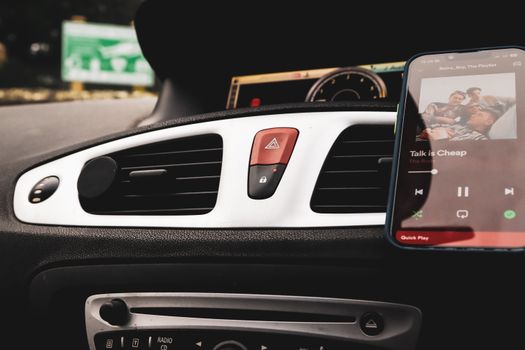 Photo: Kristian Thomas / Pexels
When it comes to GPS navigation for your car rental in Italy, you generally have two primary choices: opting for a GPS unit offered by the car rental company or relying on your personal smartphone with dedicated navigation apps. Each option presents distinct advantages and disadvantages that warrant careful consideration based on your budget, tech savviness, and travel style. Renting a GPS device directly from your car rental company offers the convenience of an integrated system. These units are typically pre-loaded with European maps and often come with multi-language support, ensuring you won't struggle with Italian prompts. The main benefit is reliability; these devices are designed for continuous use, often have larger screens, and don't drain your phone battery. They also don't rely on mobile data, which can be a significant cost-saver if you don't have an international data plan. However, the downside is often the cost. Rental companies charge a daily fee, which can add up significantly over a multi-week trip, potentially costing more than purchasing a basic portable GPS unit outright. Availability can also be an issue during peak season, and the technology might not always be the most up-to-date. On the other hand, using your smartphone for navigation via apps like Google Maps, Waze, or Apple Maps has become incredibly popular. The primary advantages are familiarity, cost-effectiveness (if you have an international data plan or rely on offline maps), and real-time traffic updates. These apps are constantly updated, offering the most current road information, points of interest, and often user-reported alerts for hazards or speed traps. Many also allow you to download maps for offline use, circumventing data roaming charges and poor signal areas, which is crucial for areas like Tuscany's rolling hills or the Dolomites. The challenges with smartphone navigation include battery drain, which necessitates a car charger or power bank, and potential data roaming costs. Furthermore, relying solely on your phone can be risky if you lose signal in remote areas or if your phone battery dies unexpectedly. The screen size might also be smaller than a dedicated GPS, making it harder to view at a glance while driving. To mitigate these issues, always download offline maps for your entire itinerary before you leave home or while connected to Wi-Fi. Invest in a reliable car mount and a fast car charger. Consider a local SIM card with a data plan if you plan to use real-time features extensively. For many travelers, a hybrid approach works best: using a smartphone app for daily navigation while having offline maps downloaded as a primary backup, or even a small, inexpensive portable GPS unit for critical stretches. Ultimately, the best choice depends on your comfort level with technology, your budget, and how much you value seamless, uninterrupted navigation. Weighing these factors carefully will ensure you're well-equipped to tackle Italy's roads with confidence. The decision point often comes down to the total cost versus the perceived reliability and ease of use. While a dedicated GPS from a rental company might seem like a straightforward solution, the cumulative daily fees can quickly exceed the one-time purchase of a reliable offline mapping app or even a low-cost portable device. Conversely, relying solely on a smartphone demands a robust international data plan or meticulous pre-planning with offline maps, along with ensuring constant power. Some travelers might even prefer the simplicity of a dedicated device that serves only one purpose – navigation – without the distractions of notifications or calls that a smartphone presents. The user interface of rental GPS units is typically straightforward, designed for quick input and clear directional prompts, which can be a significant advantage for those who prefer minimal technological fuss while driving. In contrast, smartphone apps offer a wealth of additional features, such as integrated search for restaurants, hotels, and attractions, often with user reviews, which can be invaluable for spontaneous exploration. They also benefit from community-driven updates, providing the most current information on road closures, speed traps, and traffic conditions. This real-time intelligence can be a game-changer for navigating urban areas and avoiding unexpected delays. For the budget-conscious traveler, leveraging free smartphone apps with offline map capabilities is undoubtedly the most economical choice, provided they take the necessary steps to ensure battery life and offline functionality. For those who prioritize maximum convenience and dedicated functionality without worrying about data plans or phone batteries, a rental GPS or a personal portable unit might be a better fit. It's about finding the balance that best suits your individual travel preferences and technical comfort. Ultimately, whether you opt for a rental unit or your smartphone, the key is to be prepared and understand its capabilities and limitations before you hit the Italian roads. A well-chosen navigation strategy is integral to a stress-free and enjoyable car rental experience in Italy.
Our partners at Noleggio auto in Italia offer related services.
Navigating Italy's Unique Road Challenges: ZTLs and More
Italy's charm often lies in its ancient, winding streets and historic city centers, but these very features present unique challenges for drivers, particularly when it comes to navigation. The most infamous of these are the ZTLs, or Zone a Traffico Limitato (Limited Traffic Zones). These are areas in historic city centers where vehicle access is restricted to residents and authorized vehicles during specific hours, often monitored by cameras. Entering a ZTL without permission will almost certainly result in a fine, which can arrive weeks or even months after your trip. Your GPS navigation car rental Italy setup becomes your first line of defense against these costly mistakes. A good, up-to-date GPS system will typically highlight ZTLs and warn you if your route takes you into one. However, technology isn't foolproof, and signage can sometimes be subtle or missed, especially when driving in an unfamiliar environment. Always look for the circular white sign with a red border and the words 'Zona Traffico Limitato'. It’s crucial to understand that simply following your GPS without paying attention to road signs can still lead to fines. Beyond ZTLs, Italy's road network presents other quirks. Speed limits can change frequently, often without much warning, especially on smaller provincial roads. Autostradas (motorways) are toll roads, and your GPS should ideally be able to distinguish between toll and non-toll routes, allowing you to choose based on your preference for speed versus cost. Parking in Italian cities can also be a significant challenge. Your GPS can guide you to parking garages, but understanding local parking rules (blue lines for paid parking, white for free, yellow for residents) is essential. Many historic towns have very limited parking, so planning ahead or using park-and-ride options outside the city center is often advisable. Furthermore, Italian drivers are known for their assertive style. Lane discipline might seem more fluid, and horn usage is common. While your GPS will tell you where to turn, it won't prepare you for the cultural aspects of driving. Stay alert, drive defensively, and anticipate movements from other drivers. Roundabouts are also prevalent, and while generally efficient, can be confusing if you're not used to them; your GPS will be invaluable here, giving you clear instructions on which exit to take. Another challenge is the occasional lack of clear street names or numbers, especially in older, smaller towns. Your GPS will typically rely on coordinates or landmarks in these situations, making it even more important to have a system with detailed maps. For those venturing into rural areas, particularly in regions like Tuscany or Umbria, roads can become narrow, unpaved, or winding, with limited phone signal. This is where downloaded offline maps prove indispensable, as live data streaming won't be an option. Always double-check your GPS against physical road signs, especially when entering urban areas or approaching what looks like a restricted zone. The combination of a reliable GPS, a keen eye for local signage, and a basic understanding of Italian driving etiquette will ensure your road trip is as smooth and enjoyable as the Italian espresso you'll be sipping. Planning for these challenges is part of a successful Italian road trip, ensuring that your journey is memorable for all the right reasons and free from unexpected penalties. Remember that even the best GPS can sometimes be a few seconds behind, especially when dealing with complex multi-lane junctions or rapidly approaching turns in city traffic. Therefore, always maintain situational awareness and use your GPS as a primary guide, but never as a complete replacement for observing your surroundings and interpreting road signs. This dual approach is particularly important in Italy, where local regulations and driving styles can differ significantly from what Canadian drivers are accustomed to. For instance, sometimes a ZTL sign might be accompanied by a small panel indicating specific hours or exceptions, which a GPS might not always interpret perfectly. Similarly, some smaller towns might have temporary road closures for festivals or markets that are too recent for your GPS to have updated. Having a basic understanding of common Italian road signs, such as 'Divieto di Sosta' (No Parking), 'Senso Unico' (One Way), or 'Dare Precedenza' (Give Way), can significantly enhance your driving confidence and prevent errors. This proactive approach, combining technological assistance with personal vigilance and a little local knowledge, is the recipe for a truly stress-free and enjoyable car rental experience in Italy. It allows you to focus on the beauty of the landscape and the richness of the culture, rather than being constantly worried about navigation errors or potential fines. The ultimate goal is to use your GPS as an empowering tool, not a blind guide, enabling you to explore Italy's diverse regions with confidence and ease.
Thorough preparation will always lead to a more rewarding travel experience.
Essential Tips for Seamless GPS Navigation in Italy
To truly maximize the effectiveness of your GPS navigation car rental Italy experience, consider these crucial tips that go beyond simply turning on the device. Implementing these strategies will help you avoid common pitfalls and ensure a smooth journey.
* **Download Offline Maps (Crucial!):** This cannot be stressed enough. Before you even leave Canada, or at least before you leave a reliable Wi-Fi connection, download maps for your entire Italian itinerary onto your smartphone app (Google Maps, HERE WeGo, Maps.me are great options). This ensures you have navigation even in areas with no cell signal (e.g., rural Tuscany, mountainous regions) and avoids costly data roaming charges. Offline maps are your safety net.
* **Invest in a Car Mount and Charger:** A sturdy car mount for your smartphone is essential for safe, hands-free viewing of your GPS. Don't rely on holding your phone or placing it precariously on the dashboard. A fast car charger (USB-C is common now) is equally important, as GPS apps can quickly drain your phone's battery, especially with screen on and active use.
* **Familiarize Yourself with the GPS Interface:** Whether it's a rental unit or your smartphone app, spend some time getting to know its features before you start driving. Practice entering destinations, understanding voice commands, and identifying key icons (like ZTL warnings). Fumbling with a new interface while driving on unfamiliar roads is a recipe for stress.
* **Understand ZTL Warnings (and Signs):** While your GPS might warn you about ZTLs, always cross-reference with actual road signs. Sometimes the GPS might be slightly delayed, or a temporary ZTL might not be updated. Look for the white circular sign with a red border. If in doubt, park outside the historic center and walk in, or consult a local.
* **Have a Physical Map as Backup:** In this digital age, a good old-fashioned paper map is still a valuable backup. If your GPS fails (battery dies, device malfunctions, no signal), a physical map can help you get oriented and find your way to the nearest town or major road.
* **Learn Basic Italian Road Terms:** Knowing a few key terms can save you confusion. Examples include 'Uscita' (Exit), 'Pedaggio' (Toll), 'Senso Unico' (One Way), 'Parcheggio' (Parking), 'Destra' (Right), 'Sinistra' (Left), 'Nord/Sud/Est/Ovest' (North/South/East/West). This helps when GPS instructions are ambiguous or when reading road signs.
* **Pre-Plan Parking:** Before arriving in a city, research parking options. Many Italian cities have limited and expensive parking in the center. Your GPS can guide you to parking garages ('Parcheggio') or P+R (Park and Ride) facilities on the outskirts, which are often a better choice.
* **Set Your GPS to Avoid Tolls (if desired):** If you're on a budget or prefer scenic routes, most GPS apps allow you to select options to 'avoid tolls' or 'avoid motorways'. Be aware that this might significantly increase travel time on longer journeys.
* **Be Aware of Speed Cameras:** Italy has numerous speed cameras, both fixed and mobile. Some GPS apps (like Waze) provide real-time alerts for these. Always adhere to posted speed limits, as fines can be substantial.
* **Check for Software Updates:** If you're bringing your own portable GPS device, ensure its maps are updated to the latest European version before your trip. Outdated maps can lead to incorrect directions and missed turns.
By incorporating these tips into your travel preparations, you'll transform your GPS from a mere directional tool into an indispensable travel companion, allowing you to confidently navigate Italy's diverse landscapes and charming cities. This proactive approach ensures that your focus remains on enjoying the beauty and culture of Italy, rather than on the anxieties of getting lost or incurring unexpected fines. Embrace the journey with the peace of mind that comes from being well-prepared and expertly guided.
