Unveiling the Best Time for Northern Lights Canada
best time for northern lights canada

Unveiling the Best Time for Northern Lights Canada

Unlock the secrets to witnessing Canada's breathtaking aurora borealis with our comprehensive guide.

Plan Your Aurora Adventure

Key Takeaways

  • ✓ Peak viewing season is late August to mid-April.
  • ✓ The darkest, clearest nights offer the best chances.
  • ✓ Yukon, Northwest Territories, and Nunavut are prime locations.
  • ✓ Solar activity greatly influences visibility and intensity.

How It Works

1
Understand the Aurora Cycle

The Northern Lights are caused by solar winds interacting with Earth's magnetic field. This phenomenon is more frequent and intense during periods of high solar activity, which follows an approximately 11-year cycle.

2
Choose the Right Season

While auroras occur year-round, you need darkness to see them. This makes the long, dark nights of fall, winter, and early spring (late August to mid-April) the optimal viewing window in Canada.

3
Select a Prime Location

Certain Canadian regions, particularly those further north and away from light pollution, offer consistently better viewing opportunities. The Yukon, Northwest Territories, and northern parts of provinces like Alberta and Manitoba are excellent choices.

4
Monitor Forecasts & Conditions

Even in the best season and location, clear skies and strong solar activity are crucial. Utilize aurora forecast websites and local weather reports to pinpoint the best nights for viewing.

Understanding the Prime Viewing Seasons for Aurora Borealis Canada
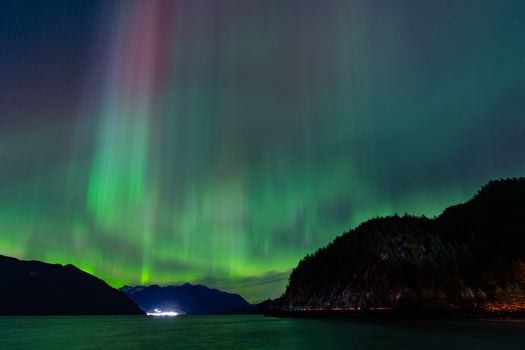
Beautiful display of Northern Lights over a serene mountain and water landscape at night. Photo: Adi K / Pexels
When planning your trip to witness the ethereal dance of the Northern Lights in Canada, timing is absolutely paramount. While the aurora borealis is a continuous phenomenon, its visibility is inextricably linked to the duration and intensity of darkness. This fundamental requirement narrows down the best time for northern lights Canada to a specific window: late August through to mid-April. During these months, the northern latitudes of Canada experience significantly longer nights and shorter days, providing the prolonged periods of darkness essential for seeing the fainter as well as the more vibrant displays. The autumn months, specifically late August and September, offer a unique advantage. The temperatures are generally milder than the deep winter, making outdoor viewing more comfortable. Additionally, the lakes and rivers haven't completely frozen over, creating stunning reflections of the aurora that double the spectacle in your photographs. As we transition into October and November, the nights grow even longer, and while temperatures begin to drop, the chances of clear skies often increase. This period can be excellent for viewing, though you'll need to bundle up more comprehensively. Winter, from December to February, is arguably the most traditional and often the most spectacular time for aurora chasing. The nights are at their longest and darkest, maximizing viewing potential. However, this comes with the trade-off of extremely cold temperatures, particularly in the northern territories. Proper winter gear is not just recommended, but absolutely essential for safety and comfort. Despite the cold, the crisp, clear air often associated with winter high-pressure systems can provide unparalleled viewing conditions. The snow-covered landscapes also add another layer of beauty to the experience, creating a pristine, white backdrop for the vibrant green, pink, and purple hues of the aurora. As spring approaches in March and early April, the nights begin to shorten, but there are still ample hours of darkness for viewing. Temperatures start to rise, offering a gentler experience than the peak of winter. This can be a great time for those who want to avoid the harshest cold while still having a very good chance of seeing the lights. It's important to remember that within this broad seasonal window, specific conditions on any given night – clear skies, minimal light pollution, and strong solar activity – are the ultimate determinants of a successful viewing. Therefore, while the season provides the framework, nightly forecasts and local conditions will guide your immediate aurora hunt. Planning your aurora trip requires a holistic approach to maximize your chances.

Optimal Canadian Destinations for Northern Lights Viewing
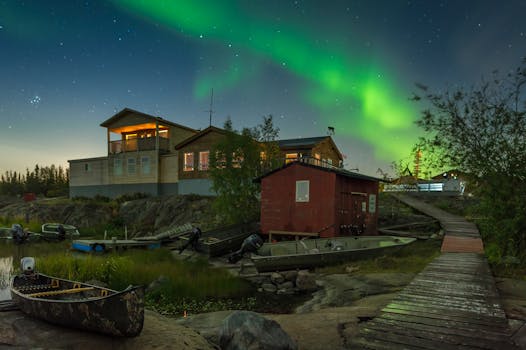
Colorful aurora borealis over rustic lakeside cabins and boats in Yellowknife, Canada. Photo: Ken Cheung / Pexels
Choosing the right geographical location within Canada is just as crucial as selecting the right season when determining the best time for northern lights Canada. Canada's vast northern expanse lies directly beneath the auroral oval, a ring-shaped region around the Earth's magnetic poles where aurora activity is most concentrated. This makes a significant portion of the country a potential viewing ground, but some areas stand out due to their consistent darkness, minimal light pollution, and established tourism infrastructure catering to aurora chasers. The Yukon Territory is often lauded as one of the premier destinations. Whitehorse, its capital, is a popular base, with numerous tour operators offering excursions away from city lights. Places like the Yukon Wildlife Preserve or the shores of Lake Laberge provide excellent dark sky access. The remoteness and pristine wilderness of the Yukon contribute to exceptionally dark skies, enhancing the intensity and clarity of the aurora displays. The region also boasts a dry climate, which often means fewer cloudy nights than coastal areas. The Northwest Territories, particularly Yellowknife, is another world-renowned aurora hotspot. Yellowknife proudly proclaims itself the 'Aurora Capital of North America,' and for good reason. Its flat, treeless landscape offers unobstructed views of the horizon, and its location directly under the auroral oval ensures frequent and spectacular displays. There are several dedicated aurora villages and viewing centres designed to provide comfortable and warm viewing experiences, often complete with heated cabins, traditional teepees, and hot beverages. This infrastructure makes Yellowknife an ideal choice for those seeking a more organized and comfortable aurora viewing adventure. Nunavut, Canada's northernmost territory, offers an even more remote and authentic Arctic experience. While access can be more challenging and expensive, the rewards are unparalleled. Communities like Iqaluit or Rankin Inlet provide incredible dark skies, and the possibility of combining aurora viewing with other Arctic adventures like dog sledding or wildlife spotting makes it a truly unique destination. For those seeking an extreme adventure and the highest probability of intense displays, Nunavut is hard to beat. Beyond the territories, northern parts of provinces like Alberta, Saskatchewan, Manitoba, and even parts of British Columbia and Ontario can offer excellent viewing opportunities, especially during strong solar storms. Places like Jasper National Park in Alberta (a designated Dark Sky Preserve) or Churchill, Manitoba (known for polar bears and belugas, but also great aurora) can be fantastic alternatives, often with easier accessibility. However, for consistent, high-probability viewing, the territories remain the top contenders. When selecting your destination, consider not only the aurora potential but also the accessibility, available amenities, and other activities you might wish to combine with your aurora chase.

Maximizing Your Chances: Weather, Solar Activity, and Essential Gear
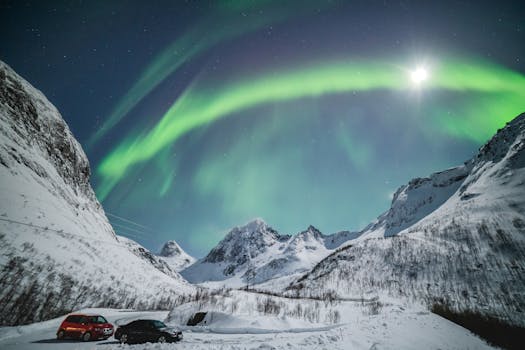
Aurora Borealis illuminates snowy peaks in Troms og Finnmark, Norway, under a starry sky. Photo: Tobias Bjørkli / Pexels
Successfully witnessing the Northern Lights, even during the best time for northern lights Canada, involves more than just being in the right place at the right season. It requires a keen understanding of atmospheric conditions and solar activity, coupled with proper preparation. The two most critical factors on any given night are clear skies and strong solar winds. Cloud cover, even thin layers, can completely obscure the aurora. Therefore, monitoring local weather forecasts meticulously is non-negotiable. Look for forecasts predicting clear, cloudless nights, especially towards the north. Many aurora tour operators and dedicated viewing lodges will track these conditions rigorously and often have backup plans or alternative viewing spots if one area is clouded over. Solar activity, specifically the intensity of the solar wind and coronal mass ejections (CMEs) from the sun, directly influences the strength and vibrancy of the aurora. Geomagnetic storm forecasts, often expressed as a Kp-index (ranging from 0 to 9), are invaluable tools. A higher Kp-index indicates a stronger geomagnetic storm and thus a higher likelihood of visible auroras, potentially even further south. Websites and apps dedicated to aurora forecasting provide real-time updates and predictions, often several days in advance. Familiarizing yourself with these resources, such as the Space Weather Prediction Center (SWPC) or Aurora Forecast apps, is crucial for timing your viewing sessions perfectly. A strong Kp-index combined with clear, dark skies is the golden ticket. Finally, preparation regarding essential gear cannot be overstated, especially if you're visiting during the colder months. Temperatures in Canada's northern regions can plummet far below freezing, making proper clothing vital for comfort and safety. Layering is key: start with a moisture-wicking base layer, add insulating middle layers (fleece, down), and finish with a waterproof and windproof outer shell. Don't forget insulated boots, thick wool socks, warm gloves or mittens, a hat that covers your ears, and a neck gaiter. Hand and foot warmers can also be a lifesaver. For photographers, a sturdy tripod, a camera with manual settings (preferably a DSLR or mirrorless), a wide-angle lens with a low aperture (f/2.8 or lower), and extra batteries (cold drains batteries quickly) are indispensable. A headlamp with a red light setting is also incredibly useful for moving around in the dark without compromising your night vision or disturbing other viewers. Remember, the longer you can comfortably stay out in the cold, the higher your chances of catching a spectacular display. Preparing for extreme weather is part of the adventure.

Common Aurora Viewing Mistakes to Avoid & Essential Tips

Chasing the Northern Lights is an incredible experience, but several common pitfalls can diminish your chances of success. Avoiding these mistakes and following some essential tips will significantly enhance your aurora hunt during the best time for northern lights Canada. **Mistakes to Avoid:** * **Relying solely on one night:** Aurora viewing is a game of patience and probability. Do not plan a trip for just one night and expect to see them. Allocate at least 3-5 nights in an aurora-prone region to maximize your chances, as weather and solar activity can be unpredictable. * **Staying in brightly lit areas:** Light pollution is the enemy of aurora viewing. Even a small town's lights can dim the display. Always venture away from city centers, preferably to designated dark sky areas or rural locations. * **Ignoring the forecast:** While solar activity can be unpredictable, ignoring the Kp-index and cloud cover forecasts is a recipe for disappointment. Check multiple sources frequently. * **Underestimating the cold:** This is a critical error. Many first-time visitors are unprepared for the extreme cold, leading to discomfort and premature retreat indoors. Invest in proper winter gear. * **Not looking up enough:** It sounds obvious, but sometimes people get distracted. Keep your eyes on the sky, especially towards the north, during peak hours (usually between 10 PM and 3 AM). **Essential Tips for Success:** * **Be patient:** The aurora can appear suddenly and disappear just as quickly. There might be long periods of waiting. Bring a thermos of hot chocolate and snacks. * **Dress in layers:** As mentioned, this is crucial. You can always remove layers if you get too warm. * **Bring a red-light headlamp:** White light can ruin your night vision and that of others. A red-light setting preserves night vision. * **Find an unobstructed view:** Look for open areas with a clear view of the northern horizon, free from trees, mountains, or buildings. * **Consider a guided tour:** Local guides know the best spots, monitor forecasts, and often provide warm shelters and hot drinks, taking much of the logistical burden off you. * **Charge all batteries:** Cold drains electronics quickly. Keep spare camera batteries, phone, and power banks warm in an inner pocket. * **Adjust your expectations:** While stunning, the aurora isn't always the vibrant, dancing display seen in professional photographs. Sometimes it's a fainter, greenish glow. Appreciate every moment you see it. * **Look for companion activities:** Even if the aurora doesn't show, ensure you have other activities planned, like dog sledding, ice fishing, or cultural experiences, to make your trip worthwhile. This ensures your journey to the best time for northern lights Canada is fulfilling regardless.

Comparison

FeatureLate Aug - SepOct - NovDec - FebMar - Mid Apr
Darkness DurationGoodVery GoodExcellentGood
Average Temp (°C)5 to -5-5 to -15-15 to -30+-5 to -15
Cloud Cover RiskModerateModerate-LowLowModerate
Reflection PotentialHighModerateLow (frozen)Moderate
Comfort LevelHighModerateLowModerate-High
Crowd LevelsModerateLowHighModerate

What Readers Say

"We visited Yellowknife in February, which everyone said was the best time for Northern Lights Canada, and they were right! The lights were absolutely breathtaking, dancing across the sky for hours. It was cold, but completely worth it for the incredible show."

Sarah J. · Toronto, ON

"Our trip to the Yukon in late September was perfectly timed. The milder temperatures made it comfortable to wait outside, and we saw spectacular auroras reflected in the lakes. Definitely the best time for Northern Lights Canada if you want comfort and beauty."

Mark D. · Vancouver, BC

"Following advice, we spent five nights in March near Whitehorse. On our third night, the Kp-index soared, and we witnessed the most vibrant display imaginable. Staying longer truly increased our odds, making it a successful hunt for the best time for Northern Lights Canada."

Elena R. · Calgary, AB

"We went in early November, hoping for fewer crowds. While the lights weren't as intense as some photos, we still saw a beautiful green glow two out of four nights. It was a good balance of cold tolerance and viewing potential for the best time for Northern Lights Canada."

Chris P. · Montreal, QC

"As an avid photographer, I chose January in Yellowknife for its dark skies and high aurora probability. The cold was extreme, but the clear nights delivered stunning photographic opportunities. This was undoubtedly the best time for Northern Lights Canada for serious photographers."

Linda K. · London, UK

Frequently Asked Questions

What month is best for Northern Lights in Canada?

While the entire period from late August to mid-April offers viewing potential, the months of December, January, and February often provide the longest and darkest nights, thus maximizing your chances. However, late August/September and March/early April offer milder temperatures with still excellent viewing opportunities.

Is it guaranteed to see the Northern Lights during the best time?

No, seeing the Northern Lights is never guaranteed, even during the optimal viewing seasons and locations. It depends on a combination of strong solar activity, clear skies, and minimal light pollution. Planning multiple nights and staying informed about forecasts significantly increases your chances.

How can I check the Northern Lights forecast for Canada?

You can check several reputable sources for aurora forecasts. Key resources include the Space Weather Prediction Center (SWPC) from NOAA, the Geophysical Institute at the University of Alaska Fairbanks, and various mobile apps like 'My Aurora Forecast' or 'Aurora Alerts'. These provide Kp-index predictions and cloud cover maps.

How much does a trip to see the Northern Lights in Canada cost?

The cost can vary significantly based on your chosen destination, duration of stay, type of accommodation, and activities. A multi-night trip to the territories (Yukon, NWT) with flights, accommodation, and guided tours can range from CAD $2,000 to $5,000+ per person. Budget options are available by staying in provincial northern towns and self-driving.

Is it better to see the Northern Lights in winter or fall in Canada?

Both winter and fall offer distinct advantages. Winter (Dec-Feb) provides the longest, darkest nights and often crisp, clear air, leading to intense displays but with extreme cold. Fall (late Aug-Sep) offers milder temperatures and the unique opportunity to see aurora reflections in unfrozen lakes, making it more comfortable for extended outdoor viewing.

Who should consider a trip to see the Northern Lights in Canada?

Anyone with an adventurous spirit and a desire to witness one of nature's most spectacular phenomena should consider it. It's ideal for nature lovers, photographers, couples seeking a romantic getaway, families looking for a unique educational experience, and solo travelers seeking solitude and wonder.

What are the safety concerns when viewing the Northern Lights in Canada?

The primary safety concern is exposure to extreme cold during winter months. Always dress in multiple layers, stay hydrated, and be aware of frostbite symptoms. If driving, ensure your vehicle is winter-ready. When joining tours, guides prioritize safety in remote locations. Always inform someone of your plans if venturing out alone.

Will climate change affect the best time for Northern Lights in Canada?

Climate change primarily affects weather patterns, potentially leading to more unpredictable cloud cover or changes in seasonal temperatures, which could indirectly impact viewing conditions. However, the geomagnetic phenomenon itself, driven by solar activity, is not directly affected by Earth's climate. The optimal seasons for darkness will remain consistent.

Embark on an unforgettable journey to witness Canada's celestial masterpiece. By understanding the best time for Northern Lights Canada, choosing optimal locations, and preparing wisely, you're set for an experience that will stay with you forever. Start planning your aurora adventure today!

Topics: best time for northern lights canadaaurora borealis Canadanorthern lights forecastwinter northern lights CanadaYukon aurora viewing
Leo List

IE Escorts NO Escorts US Escorts NZ Escorts AU Escorts
Brampton weed
Adultwork EstrelaBet Vai de Bet R7 Bet Betão Galera Bet Rainbet Bet9ja Shop SportyBet BetKing Sisal Loto Foot Hollywoodbets YesPlay Odibets RushBet Jugabet BetWarrior BetCity MSport betPawa Fortebet